
Chris Otten, DC4RD, April 2026
Over the past decade, city officials pushed to add 36,000 new housing units to the city’s stock. [DC Executive] https://housing.dc.gov/
Over that same period, Washington, DC lost roughly 40,000 Black residents. [US Census 2020] http://www.dc4reality.org/updates/669
Looking back, DC has followed a dominant theory: build more housing, and affordability will follow. The premise—more supply lowers prices—has become gospel among urbanists and policymakers.
But DC is no longer a theory.
It is a test case that has a track record which can be studied.
Since 2010, the District has added tens of thousands of housing units, consistently producing around 5,000 per year. [DC Housing Indicator Tool] https://hit.housingand.org/jurisdictions/dc
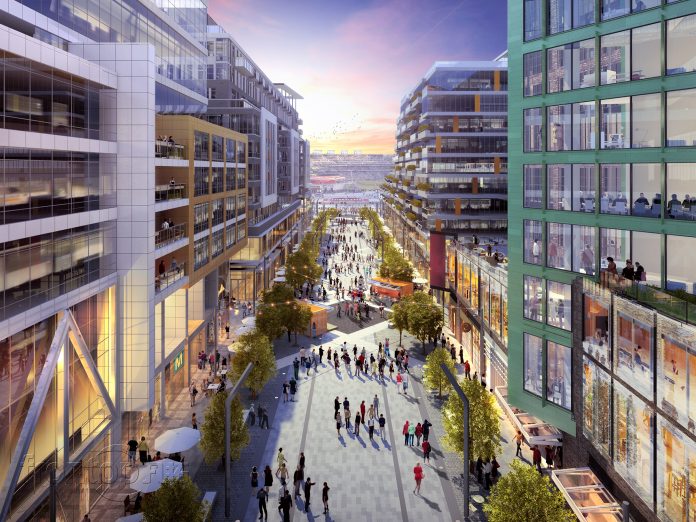
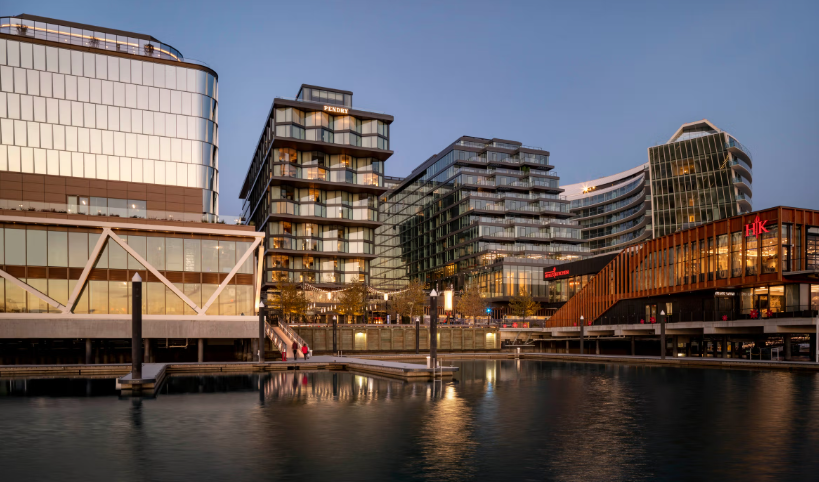
Dense, multi-family development has reshaped entire neighborhoods—Navy Yard, Shaw, Union Market, the Wharf.
If “build more” worked as promised, affordability should have improved. It hasn’t and instead longtime residents have been displaced and replaced.
Build More, Displace More
In the DC neighborhoods that saw the most rapid development, demographic turnover has been stark. Long-standing communities have nearly completely flipped along race and class lines. [DC Council Office on Racial Equity] https://www.dcracialequity.org/dc-racial-equity-profile
And, despite the city celebrating its new 36,000-housing unit milestone, nearly 45% of DC renters are rent-burdened, spending more than 30% of their income on housing—and for Black renters, it’s over 54% [DC Fiscal Policy Institute] https://dcfpi.org/all/nearly-half-of-all-renters-and-more-than-half-of-black-renters-in-dc-struggle-to-afford-rent-2/
Even after immense pandemic-era population loss and more recent numbers showing DC’s net in-migration has flatlined, the city’s housing costs have continued to climb. [DC Policy Center] https://www.dcpolicycenter.org/publications/chart-of-the-week-dc-population-growth-slowed-key-trends-concerning/
Rising costs have narrowed access to homeownership too. East of the Anacostia River, the share of home purchase loans going to Black buyers fell from 92% in 2007 to 75% in 2021 [Urban Institute] https://www.urban.org/research/publication/homeownership-and-race-dc-communities-east-anacostia-river
This is not a coincidence. Rising land values, speculative investment, and new construction have moved together—not separately.
And yet in the face of these critical statistics, the policy response remains the same: simply build more housing.
At this point, that approach looks less like analysis and more like ideology—one that assumes housing markets behave neutrally. In reality, more growth under current conditions rewards higher-income households and real estate investors, accelerating speculation and deepening DC’s inequalities.
Even the city’s own housing framework acknowledges the need to both increase supply and “fight displacement” [DC Department of Housing and Community Development] https://web.archive.org/web/20251113061335/https://housing.dc.gov/page/housing-dc-our-progress
It should be pretty clear, building more housing and championing growth alone is not enough.
After more than a decade of intensive development throughout the city, there is little local evidence that market-rate construction alone has delivered broad affordability gains for anyone in DC.
What the data clearly shows, however, is growth and building more has led to persistent and devastating displacement—especially among long-standing DC communities most vulnerable to rising land values.
DC’s experience reveals the limits of a purely market-driven approach: supply alone does not guarantee affordability and can coincide with widespread displacement if untethered to real equity and affordability requirements.
This experience should shape the city’s housing debate, especially as a lame-duck mayor on the way out tries to advance a new Comprehensive Plan that will direct DC development for many years to come. [51st News] https://51st.news/dc-flum-housing-density-displacement/
A serious housing strategy would grapple with this lived DC reality—pairing new construction with tenant protections, preservation of existing affordable housing, social housing investment, and constraints on speculative land practices.
Otherwise, the same story will continue: DC builds more housing—and becomes less affordable for the people who have already been here and deserve the right to stay.
###