

The Mamdami Pivot: Private Partners First, Social Housing Later

Structural and Financial Dynamics of the NYC “Neighborhood Builders” Fast Track Program

Executive Summary

The Neighborhood Builders Fast Track program, a cornerstone of the Mamdani administration’s housing policy, utilizes a “Public Land for Public Good” model.

This approach moves away from the permanent sale of city assets, instead utilizing long-term ground leases with a pre-qualified roster of private and non-profit developers to accelerate the production of affordable housing.

The Fast Track model shifts the developer’s role from “speculative owner” to “long-term service partner.” While the developer manages the building’s income to sustain operations and earn a fee, the City maintains ultimate control over the land, the air rights, and the long-term future of the asset.

Key Components of the Program

1. Land Ownership and Developer Role
Under this program, the City of New York retains full ownership of the land. It is not sold to developers. Instead, the City enters into long-term (typically 99-year) ground leases. The developer’s role is to finance, build, and manage the housing for the duration of the lease. At the end of the term, the land and the physical building revert to City ownership.

2. Ownership and Control of Air Rights
The City remains the owner of all air rights (unused development rights) above the public land.

  • No Tradable Value: Developers cannot sell, trade, or transfer these air rights to neighboring properties for profit.
  • Restricted Use: The developer is granted a leasehold interest to build into that airspace, but only for the specific purpose of creating the affordable units outlined in their contract. The air rights are used as a policy tool to increase density, not as a financial asset for the builder.

3. Financial Benefit and Revenue Streams
While the monthly rent from tenants is collected by the developer, it does not function as unrestricted private profit:

  • Operating and Debt Service: Rental income is primarily used to cover building operations (maintenance, staff) and to pay back construction loans.
  • Capped Compensation: Developer “profit” is restricted to a pre-negotiated developer fee and a capped percentage of cash flow.
  • Mission-Driven Focus: By prioritizing non-profits and M/WBEs, the program ensures that any surplus revenue is often reinvested into community services or reserve funds for building longevity.

4. Income Requirements and Affordability
The program targets households earning between 30% and 80% of the Area Median Income (AMI). In 2026, this generally translates to:

  • Extremely Low Income: ~$34,000 – $48,000 (30% AMI)
  • Moderate Income: ~$90,000 – $130,000 (80% AMI)
    Rents are legally capped at 30% of the household’s income to ensure permanent affordability.

Conclusion

The Fast Track model shifts the developer’s role from “speculative owner” to “long-term service partner.” While the developer manages the building’s income to sustain operations and earn a fee, the City maintains ultimate control over the land, the air rights, and the long-term future of the asset.


End Notes: Sources and Substantiation

  1. HPD “Neighborhood Builders” Program Guidelines: Substantiates the city’s use of pre-qualified rosters to streamline the selection of M/WBE and non-profit developers for city-owned sites. NYC HPD Neighborhood Builders
  2. Mamdani Administration Policy Brief (March 2026): Confirms the “Public Land for Public Good” mandate and the shift toward long-term ground leases instead of land sales. Mayor’s Office Press Release
  3. Ground Lease Legal Framework: Details the mechanism of “reversion,” where the building and development rights return to the city at the end of a 50-to-99-year term. Holland & Knight: Ground Lease Exploration
  4. HPD ELLA (Extremely Low & Low-Income Affordability) Term Sheet: Substantiates the cap on developer fees (typically 15% of costs) and the requirement that rental income primarily covers debt and operations. HPD ELLA Term Sheet
  5. NYC Department of City Planning – Air Rights Guide: Explains that air rights on city land are public assets and clarifies the restrictions on transferring those rights from public parcels to private developers. NYC Planning: Air Rights Definition
  6. 2026 Area Median Income (AMI) Projections: Provides the basis for the income limits (30%–80% AMI) and rent-to-income ratios cited in the memo. Novogradac: 2026 Income Limit Estimates
  7. Zoning & Land Use Analysis: Outlines how the “City of Yes” and ELURP initiatives allow for increased density (using air rights) specifically for affordable housing. Greenberg Traurig: City of Yes Update

Who Really Pays for YIMBY Growth? Supply and Demand Doesn’t Live Here

“Build more housing” has become a kind of civic gospel in Washington, DC. Its most ardent believers—often calling themselves YIMBYs—offer a simple promise: increase supply, and prices will fall.


Over the past decade, 36,000 new homes were built or preserved in DC. Over that same time, 40,000 Black DC residents were displaced from the city. One in four from Ward 1. One in three from Ward 2. More here.


That supply-and-demand logic definitively works for retail. When a store has too much inventory, it cuts prices to move products. Supply goes up, prices come down. Econ 101.

But housing is a fundamental human need, not a retail widget—and treating it like one obscures who actually pays the price of more supply.

When a butcher discounts an excess of frozen lamb shanks, it doesn’t affect nearby neighbors. No one next door bears the cost of that retail transaction. Housing is different. When new density entitlements and construction arrives, it doesn’t just affect buyers and sellers—it reshapes the lives of everyone nearby.

Construction Impacts Fall on the Nearby Community Without Compensation

That is, longtime residents don’t experience “supply gains” in the abstract. They experience years of construction: noise, dust, vibration, blocked sidewalks, diesel fumes. For older residents and families especially, these aren’t minor inconveniences—they are very real daily disruptions that may compel no choice but to leave. Families with children are forced to navigate active construction zones on their way to school, contending with trucks, cranes, and real pedestrian safety risks.

And, right now, none of these quality of life impacts onto the surrounding neighborhood are compensated. They are simply expected to be quietly absorbed by existing neighbors and vulnerable communities.

And the physical and mental construction disruption is only part of the “who pays” story.

Rapidly Rising Property Tax and Utility Bills

As neighborhoods are upzoned and redeveloped, the DC tax appraiser soon acometh and property assessments rise. Homeowners face higher tax bills. Renters see those increases passed through to their annual rent. Utility companies must expand existing infrastructure—pipes, grid capacity, service—to accommodate additional population induced by the new density, and those upgrades and “resiliency” updates are charged in the rising bills of existing ratepayers.

In other words, the costs of “build more” are not borne by the new residents being attracted to the city, they are externalized by the real estate investor class onto the people who already live here.

Yet this adverse reality for existing neighbors is largely missing from the dominant private market-based housing narrative. Supply-driven advocates rarely address who absorbs the externalized costs of “build more” or how they intersect with the District’s deep racial and economic inequalities.

The Result is Displacement

Recent Census numbers show that this harm is not hypothetical—the burden of rapid development has fallen hardest on DC’s lower-income residents—many of whom have not seen their incomes keep pace with rising housing-related expenses.

Over the past decade, tens of thousands of new or preserved housing units have been added to DC stock. Over that same period, tens of thousands of lower-income residents have been displaced.

That is not coincidence. It is the predictable outcome of growth without safeguards.

To be clear: the answer is not necessarily to stop building. The city needs truly affordable family-sized housing. But “build more” cannot be the entire policy.

Protections & Compensation with Building More

If DC policy-makers are serious about adding housing, it must also be serious about protecting the people who are already here.

That means compensating residents for prolonged construction impacts. It means preventing sharp increases in property taxes and utility costs from being passed onto existing households. It means ensuring infrastructure expansion isn’t funded disproportionately by current ratepayers. And it means directly addressing displacement—not treating it as an unfortunate but acceptable side effect.

Housing policy cannot just be about units. It has to be about people.

Because housing isn’t a retail widget, its a fundamental human right. And until housing growth policy reflects the true cost of “building more”, the harmful side of this supply-side policy will continue to be paid by those with the least power to bear it.

###

DC Built More Housing. Costs Went Up—and So Did Displacement.

Chris Otten, DC4RD, April 2026

36-2.jpg

Over the past decade, city officials pushed to add 36,000 new housing units to the city’s stock. [DC Executive] https://housing.dc.gov/

Over that same period, Washington, DC lost roughly 40,000 Black residents. [US Census 2020]  http://www.dc4reality.org/updates/669


Looking back, DC has followed a dominant theory: build more housing, and affordability will follow. The premise—more supply lowers prices—has become gospel among urbanists and policymakers.

But DC is no longer a theory.
It is a test case that has a track record which can be studied.

Since 2010, the District has added tens of thousands of housing units, consistently producing around 5,000 per year. [DC Housing Indicator Tool] https://hit.housingand.org/jurisdictions/dc

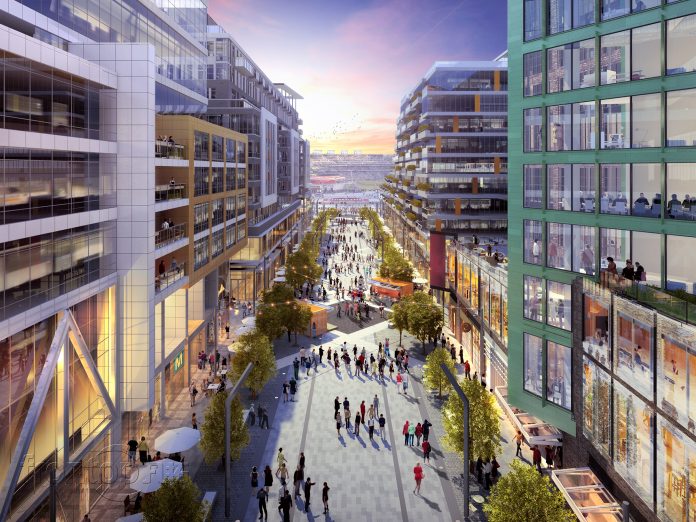
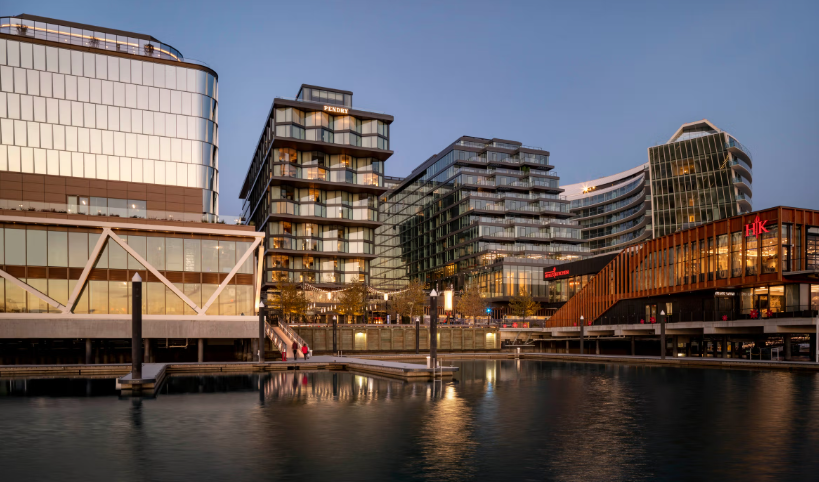
Dense, multi-family development has reshaped entire neighborhoods—Navy Yard, Shaw, Union Market, the Wharf.

If “build more” worked as promised, affordability should have improved. It hasn’t and instead longtime residents have been displaced and replaced.

Screenshot from 2026-04-03 23-35-16.png

Build More, Displace More

In the DC neighborhoods that saw the most rapid development, demographic turnover has been stark. Long-standing communities have nearly completely flipped along race and class lines. [DC Council Office on Racial Equity]  https://www.dcracialequity.org/dc-racial-equity-profile

And, despite the city celebrating its new 36,000-housing unit milestone, nearly 45% of DC renters are rent-burdened, spending more than 30% of their income on housing—and for Black renters, it’s over 54% [DC Fiscal Policy Institute] https://dcfpi.org/all/nearly-half-of-all-renters-and-more-than-half-of-black-renters-in-dc-struggle-to-afford-rent-2/

Even after immense pandemic-era population loss and more recent numbers showing DC’s net in-migration has flatlined, the city’s housing costs have continued to climb. [DC Policy Center] https://www.dcpolicycenter.org/publications/chart-of-the-week-dc-population-growth-slowed-key-trends-concerning/

Rising costs have narrowed access to homeownership too. East of the Anacostia River, the share of home purchase loans going to Black buyers fell from 92% in 2007 to 75% in 2021 [Urban Institute]  https://www.urban.org/research/publication/homeownership-and-race-dc-communities-east-anacostia-river

This is not a coincidence. Rising land values, speculative investment, and new construction have moved together—not separately.

And yet in the face of these critical statistics, the policy response remains the same: simply build more housing.

At this point, that approach looks less like analysis and more like ideology—one that assumes housing markets behave neutrally. In reality, more growth under current conditions rewards higher-income households and real estate investors, accelerating speculation and deepening DC’s inequalities.

Even the city’s own housing framework acknowledges the need to both increase supply and “fight displacement” [DC Department of Housing and Community Development] https://web.archive.org/web/20251113061335/https://housing.dc.gov/page/housing-dc-our-progress

It should be pretty clear, building more housing and championing growth alone is not enough.

After more than a decade of intensive development throughout the city, there is little local evidence that market-rate construction alone has delivered broad affordability gains for anyone in DC. 
What the data clearly shows, however, is growth and building more has led to persistent and devastating displacement—especially among long-standing DC communities most vulnerable to rising land values.

DC’s experience reveals the limits of a purely market-driven approach: supply alone does not guarantee affordability and can coincide with widespread displacement if untethered to real equity and affordability requirements.

This experience should shape the city’s housing debate, especially as a lame-duck mayor on the way out tries to advance a new Comprehensive Plan that will direct DC development for many years to come. [51st News] https://51st.news/dc-flum-housing-density-displacement/

A serious housing strategy would grapple with this lived DC reality—pairing new construction with tenant protections, preservation of existing affordable housing, social housing investment, and constraints on speculative land practices.

Otherwise, the same story will continue:  DC builds more housing—and becomes less affordable for the people who have already been here and deserve the right to stay.

###

Tonight, U Street ANC Considers Residential Deregulation That Likely Hits Wards 5, 7, and 8 Hardest

FOR IMMEDIATE RELEASE
DC for Reasonable Development, Chris Otten, 202-810-2768
January 8, 2026
Behind Rhetoric of Ward 3 “Exclusivity” – U Street ANC Considers Residential Deregulation That Likely Hits Wards 5, 7, and 8 Hardest
Washington, DCTonight, an ANC resolution is being considered by Advisory Neighborhood Commission 1B (ANC1B) that is being touted as a way to dismantle exclusionary zoning in wealthy neighborhoods like Ward 3. Housing advocates warn the proposal is far more likely to increase displacement and speculative redevelopment in Wards 5, 7, and 8.

The resolution (attached) — “Resolution Urging By-Right Gentle Density Throughout the District of Columbia,” whose language and policy framework closely track a recent housing deregulation report by the conservative think tank, American Enterprise Institute (AEI) — was introduced by Advisory Neighborhood Commission 1B Commissioner Francois Barrilleaux and urges the District’s Office of Planning to embed sweeping zoning changes into the Comprehensive Plan.

If adopted by the city, the proposal would allow demolition and conversion of single-family homes into multi-unit housing “by-right”, removing community review and ANC advice for residential projects across large swaths of the city without any deeper affordability requirements.

Supporters argue the changes would open up high-income neighborhoods to more affordable housing, but the proposal makes no attempt to tie any of the extra density granted “by-right” to assurances of additional affordability or for more family-sized homes.

Critics counter that economic realities would make widespread redevelopment in places like Ward 3 unlikely, even with zoning deregulation.  Anti-displacement advocates say the greatest impacts unironically would fall on Wards 5, 7, and 8, where lower land costs, higher investor access, and by elimination of community review, fewer safeguards would make existing family homes more vulnerable to speculative acquisition and demolition.

“This is being sold as a challenge to exclusivity, but the market doesn’t work that way,” said Debby Hanrahan of Save DC Public Land. “By-right deregulation won’t remake Ward 3 — it will put more pressure on families in DC neighborhoods already at risk.”


The American Enterprise Institute, whose housing-policy efforts seek land use deregulation and expanded by-right development, is governed by a board that includes real estate developers, private equity executives, hedge fund managers, and property investors — sectors that would materially benefit from reduced zoning limits and the removal of community review.

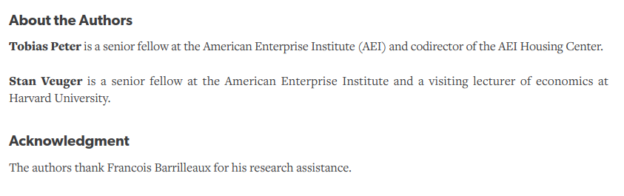
AEI publicly credits 1B02 Commissioner, Francois Barrilleaux, a paid employee of the conservative right think tank, for research assistance on the report that informs the ANC resolution.

Screenshot_2026-01-08_15-48-46.png

Barrilleaux has also stated publicly that his goal is to build a citywide coalition of ANCs to push these recommendations into District planning and zoning policy.

“The ANC Commissioner makes no attempt to look at the far reaching affects of this proposal especially on DC communities already reeling from the adverse impacts of 15 years of immense land speculation. Equitable housing policy should reduce displacement, not shift it,” Hanrahan said. “This resolution signals the opposite direction of anti-displacement strategies like social housing.”


###
Media Contact
DC for Reasonable Development
Chris Otten
202-810-2768
dc4reality@gmail.com

An Opportunity (lost?) For Inclusion: WARD 3 UPZONING HEARINGS

✌️Peace Neighbors,

For years, pro-growth activists in Washington, DC have framed debates about development through a misleading binary: branding advocates of corporate-driven deregulation and by-right real estate speculation as “YIMBYs,” while dismissing community members who question unrestrained growth as “NIMBYs” or obstructionists.

But Zoning Commission hearings on Ward 3 upzoning have begun to expose how hollow the false YIMBY v. NIMBY binary framing truly is. 

The testimony and record make clear that this debate is not about being “for” or “against” housing, but about who benefits, who bears the costs, and whose voices are ignored—raising serious questions for those who have long pointed fingers rather than examining the realities they defend.

AN OPPORTUNITY FOR INCLUSION: WARD 3 UPZONING HEARINGS

The Ward 3 upzoning proposals were brought forward by the Mayor, through the Office of Planning, (Case Nos. 25-09 and 25-13) and ask the DC Zoning Commission to upzone dozens of parcels in by swipe of the pen — effectively creating hundreds of millions of dollars in new speculative land value and air rights.  

Screenshot_2025-12-14_15-30-34.jpg
Screenshot_2025-12-14_15-31-07.jpg


At these DC Zoning Commission hearings,
 the supposed villains — longtime Ward 3 residents, preservationists, better planning advocates and community housing activists — were the ones demanding that much more truly affordable housing and actual planning for the immense population growth be expressly tied to the massive new density giveaways proposed for large swaths of Connecticut Avenue and Wisconsin Avenue, including Woodley Park, Cleveland Park, Tenleytown, and Friendship Heights.

The question raised by the alleged “obstructionists” was simple: why should that value accrue to the market without real consideration of the impacts and without firm public benefit?

Meanwhile, at these same hearings many self-identified “pro-growth” voices loudly focused almost exclusively on maximizing new construction, demanding as much height and density as possible while leaving racial equity as an afterthought — something the market might deliver later, if at all, per the YIMBY-way.

Let’s be clear: bigger, taller new buildings in Ward 3 without real requirements to repair the harms of the past are not progressive housing policy. 

They are a choice — one DC has made for decades — with predictable results: tens of thousands of new expensive market-rate units, a miniscule amount of family-sized homes, little deeply affordable housing, and continued displacement, including the loss of roughly 60,000 Black residents over the past two decades (US Census).

So who is actually asking for inclusion in exchange for the proposed new taller bigger buildings in Ward 3?

Not the pro-growth advocates calling for upzoning at any cost, no strings attached, let the market figure it out later.

Rather, it was neighbors who insisted that if the city is going to create enormous new land value along Connecticut and Wisconsin Avenues with the stroke of a pen, DC’s working families and public must receive something real in return — something that actually meets DC’s stated affordability goals and racial equity commitments.

Screenshot_2025-12-14_15-44-39.jpg

That position was captured plainly by Deidre Brown of the Ward 3 Democratic Committee, who warned that affordability set at 60% of median family income does not reach most Black families in DC — and that without deeper affordability and family-sized units, equity rhetoric rings hollow.

See:  https://www.youtube.com/live/35td4HApPCo?si=sFME7EyE8PPG9AzB&t=16337

CHECK OUT THE VISIBLE CONTRAST OF POSITIONS ON THE RECORD YOURSELF :

Density is easy. Equity is the fight — and many longtime Ward 3 residents are showing up for it.  

Truly disgusting racism and classism exists, and when it appears during testimony at hearings, it deserves outcry and criticism. But that’s not what these Ward 3 zoning hearings are revealing.

Instead, what the hearings show is a deeper splitbetween those who treat density as the goal itself, perhaps knowingly or not in service of DC’s real estate speculators, and those who insist new growth be a tool for racial and economic equity in the District of Columbia.

In Ward 3, the people fighting hardest for affordability aren’t the loudest “pro-growthers”. It’s the neighbors who have in many cases been unfairly castigated as “obstructionists” — those folks who are now demanding that new growth finally deliver on the promises DC keeps making, and failing, to keep.

The recent zoning hearings reveal it is past time to shed the gross rhetorical reductionism of the binary IMBY vs. IMBY high-school name-calling and get to the real work of delivering true inclusivity in Ward 3 and beyond.  

Chris Otten (social housing in my back yard)
DC for Reasonable Development

###

Political Price to Pay on RFK Due to Persistent “Extreme Levels of Income Inequality”

DC4RD Press Update
SEP 16, 2025
The Political Price for “Egregious” RFK Stadium Deal As “Extreme Levels of Income Inequality” Persists in DC; Social Housing Needed to Rightsize Stadium Deal
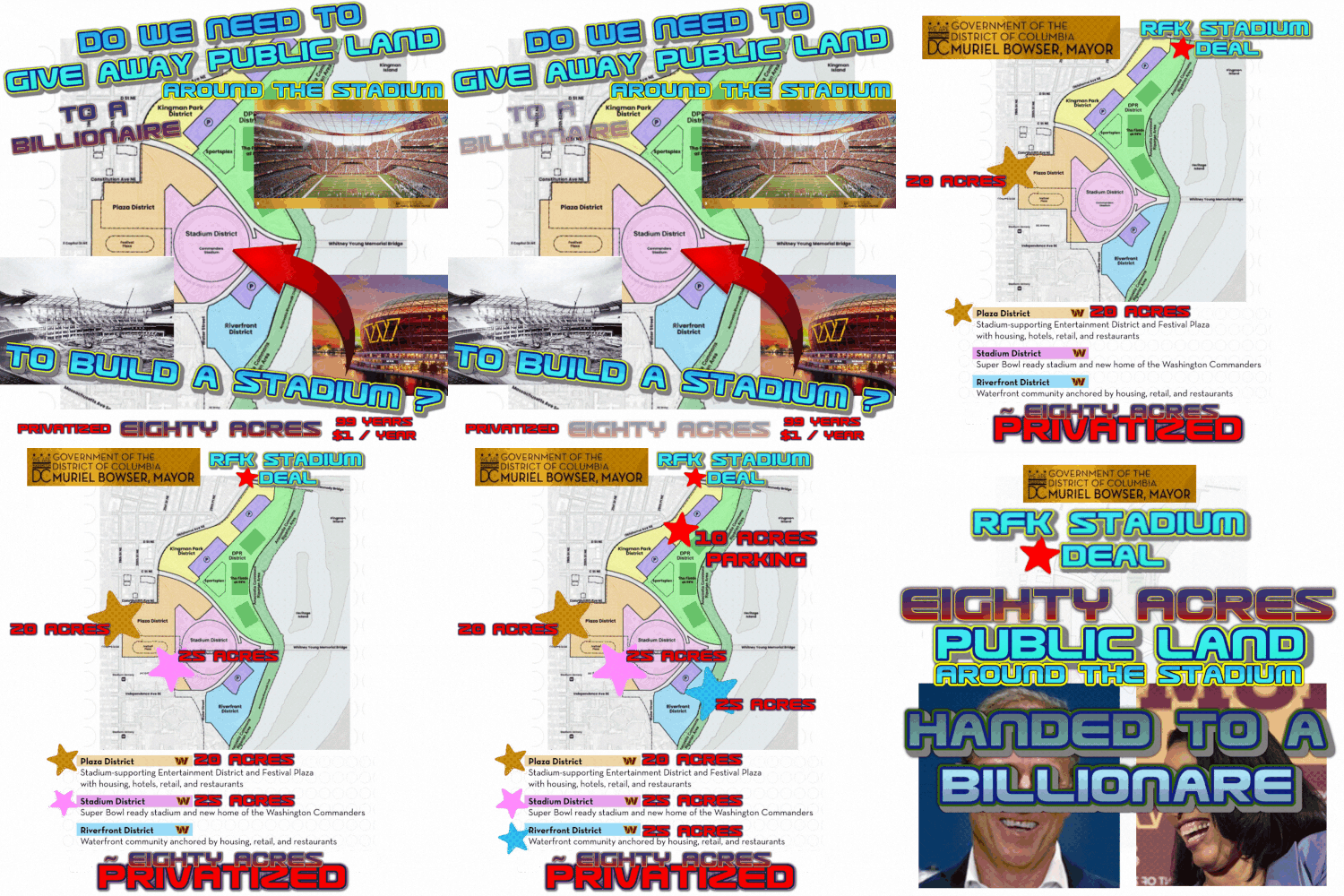
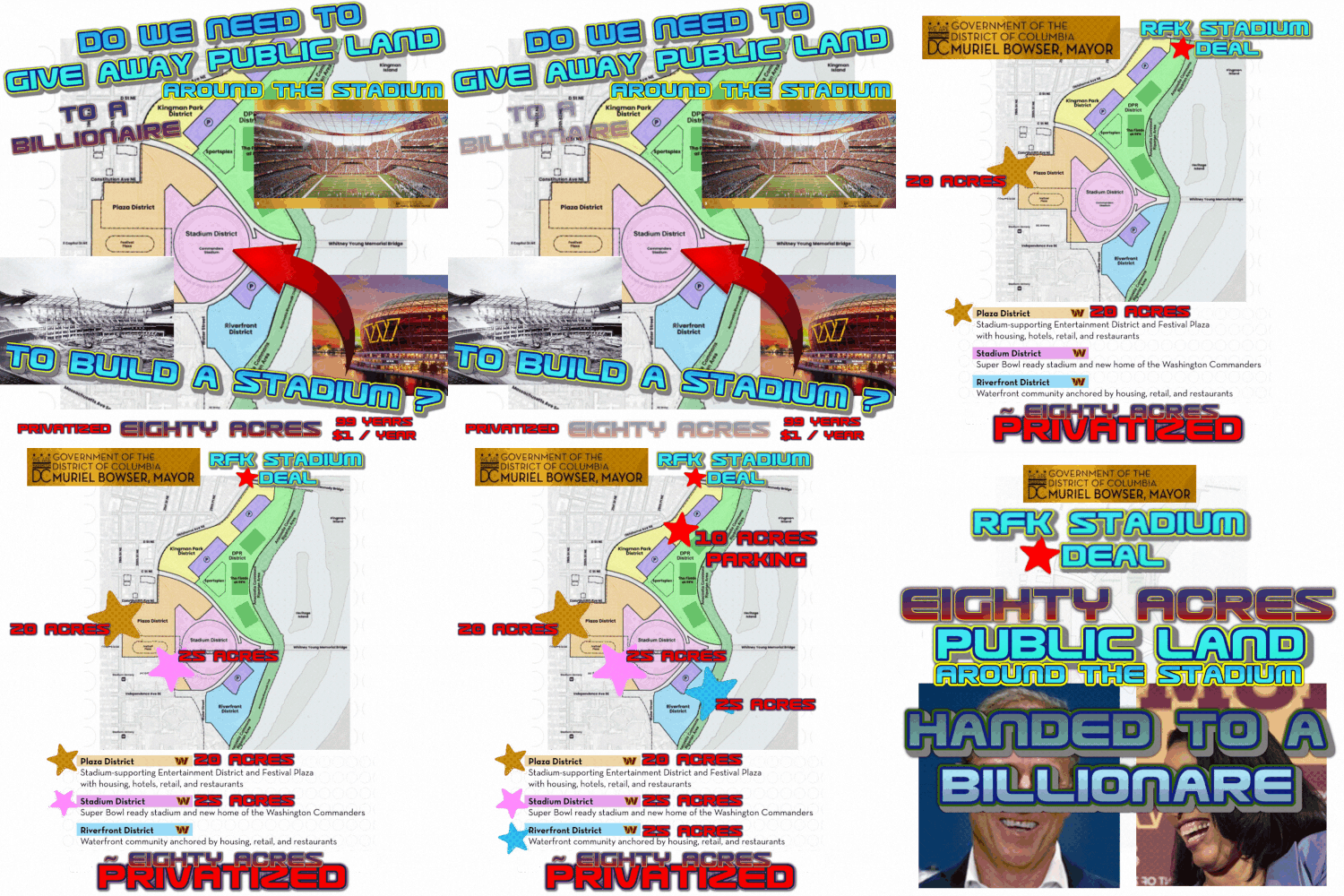
As a new DCFPI report shows, “Extreme Levels of Income Inequality Persist” in the city, just as the D.C. Council is on the precipice of greenlighting the largest land giveaway in city history: 80 acres at the RFK campus — 20 acres for a billionaire's luxury football stadium, and 60 more acres to Josh Harris for high-end condos, hotels, and commercial development. All this land gifted for a few dollars a year for up to 99 years.

RFKGiveawayAwayAway__medlite2_med.gif

“The land rent break is so egregious in magnitude,” economist Geoffrey Propheter wrote on social media, “that if I didn't know it was proposed by a mayor for a stadium, I would have assumed the sublessee had incriminating evidence on the lessor and was using it for a shakedown.”


It’s “the biggest public sports subsidy in U.S. history by a mile,” according to Neil deMause, a journalist who tracks stadium deals across the country for Field of Schemes. deMause puts D.C.’s total subsidy at over $6.5 billion.


This level of corporate welfare is being excused in part by Council Chairman, Phil Mendelson, who points to the affordable housing Josh Harris promises to build including for households making 60% of the area median income or about $100,000 a year in annual income (The Area Median Income, which has rapidly increased annually for the past decade, is now at $163,900 for a family of four).  

SOCIAL HOUSING TO MAKE RFK DEAL BETTER
Local housing advocates have said the status quo AMI housing as proposed in the RFK deal is not affordable and have pointed to including social housing as a way to make this RFK much much better

“Integrating social housing at RFK could transform a lopsided stadium deal into an engine of equity and economic resilience—helping to cover infrastructure and debt costs without pushing the burden onto working families.”

As the retiring Washington Post columnist Colbert I. King warned in 2019, D.C. government plays an “active role in development, selling or leasing publicly owned land, changing zoning laws, closing alleys and providing developers with inducements to construct new or refurbish old buildings … with resultant racial and class tensions.”

The reverbating political price for RFK may likely be as high as the actual cost of the stadium to the city year over year.

###

Citations:


News Roundup — Mendelson’s Deal Still Gives Away The Land —> Fwd: Fair Fridays: Our Last Stand (and then celebration!)

RFK News 
Monopoly Man Makes Mumbo Muriel Happy, Sets his Own Stadium Deal Terms Before the Public Hearing on July 29!

Screenshot_2025-07-25_12-43-18.jpg

Hill Rag — July 25 — https://www.hillrag.com/2025/07/25/council-chair-reaches-deal-with-commanders-at-rfk/Council — Chair Reaches Deal With Commanders at RFK
WaPo — July 24 — https://www.msn.com/en-us/news/us/mendelson-reaches-deal-with-commanders-on-rfk-site-amid-growing-pressure/ar-AA1Je1IP — Mendelson reaches deal with Commanders on RFK site amid growing pressure
NBC Sports — July 24 — https://www.nbcsports.com/nfl/profootballtalk/rumor-mill/news/d-c-council-sets-commanders-stadium-vote-for-august-1
D.C. Council sets Commanders stadium vote for August 1, D.C. Council is done dragging its feet. Next week, they'll vote on the proposed Commanders facility, to be built at the site of RFK Stadium.
WUSA9 — July 24 — https://www.wusa9.com/article/news/investigations/commanders-stadium/commanders-dc-council-rfk-stadium-deal-reached-sources/65-b80922cc-20ea-41d4-bfb8-b739dc4c1bb3 — DC Council chair reaches amended deal with Commanders on RFK Stadium, sources say WASHINGTON — DC Council Chair Phil Mendelson has reached a deal with the Commanders on an amended stadium agreement, which he will put…
Councilmember Charles Allen suggest ways to improve the deal:

Ward 7 Gets Almost Nothing Guaranteed to Help Repair the Disinvestment Harms of the Past & Many Folks Still Feel Left Out –WUSA9 — July 25 — https://www.wusa9.com/article/news/investigations/commanders-stadium/vote-on-rfk-stadium-redevelopment-nearby-residents-left-out/65-4ea02ae0-791a-44b6-b1c2-fd47fc3de5b2 — Vote on RFK Stadium redevelopment moves forward, but nearby residents say they’re being left out
And Yet Still Almost Half of this Public Site's Air Rights (the Control of the Public Land) is Given Away for a Pittance to Billionaire Josh Harris for up to 99 Years.  Leaving Hundreds of Millions, some say in the Billions in land value and control on the table at a time of deep budget cuts and economic uncertainties.
RFKGiveawayAwayAway__medlite2_med.gif

Nothing yet in the terms to promote Social Housing — No terms about retaining municipal control to ensure self-determination for Ward 7 and the City to Build What WE want and what WE need WHEN we need it.
No one has explained why the land around the stadium has to be given away, when we know the value of the land is exactly where the $ will come to pay off debt serving and then some, including a community investment fund dedicated to East of the River peoples in the name of reparations and equity.

SOME THINGS TO DO AND MORE BELOW.

———- Forwarded message ———
From: Info FBC <info@fairbudget.org>
Date: Fri, Jul 25, 2025 at 10:57 AM
Subject: Fair Fridays: Our Last Stand (and then celebration!)
To: Info FBC <info@fairbudget.org>
Our Last Stand (and then celebration!)

Fwd: DC Budget 2026: DC Council Chair, Phil Mendelson Wants Budget Cuts, Not Revenue Solutions; It’s a “Trump-like Attack on DC’s Black & Brown Working-Class”

fyi

———- Forwarded message ———
Date: Thu, Jul 3, 2025 at 12:36 PM
Subject: <Press Update> DC Budget 2026: DC Council Chair, Phil Mendelson Wants Budget Cuts, Not Revenue Solutions; It's a “Trump-like Attack on DC's Black & Brown Working-Class”
To: <press@dc4reality.com>, <press_it_now@dcfeedback.com>
Cc: <secretary@dc.gov>, Henderson, Christina (Council) <chenderson@dccouncil.gov>, <rwhite@dccouncil.gov>, <abonds@dccouncil.gov>, McDuffie, Kenyan (Council) <kmcduffie@dccouncil.gov>, <wfelder@dccouncil.gov>, <callen@dccouncil.gov>, Parker, Zachary (Council) <zparker@dccouncil.gov>, <jlewisgeorge@dccouncil.gov>, <mfrumin@dccouncil.gov>, <bpinto@dccouncil.gov>, Nadeau, Brianne K. (Council) <bnadeau@dccouncil.gov>, Mendelson, Phil (COUNCIL) <pmendelson@dccouncil.gov>
FOR IMMEDIATE RELEASE
July 2, 2025

DC Budget 2026: DC Council Chair, Phil Mendelson Wants Budget Cuts, Not Revenue Solutions; It's a “Trump-like Attack on DC's Black & Brown Working-Class” 

(In Memoriam David Schwartzman)

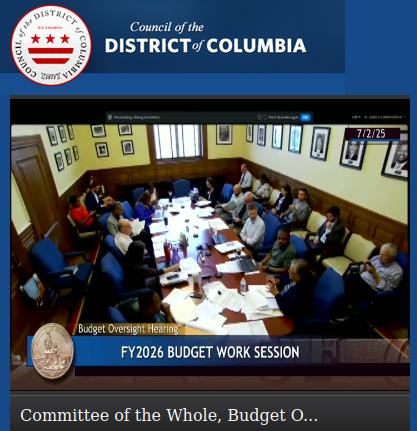
Washington, DC — July 2, 2025 — During a budget work session Wednesday, DC Council Chair Phil Mendelson pushed back against proposals by Councilmember colleagues who want to seek out new revenue to reverse the deep cuts found in Mayor Bowser’s proposed FY 2026 budget, which many have called a “MAGA austerity budget.”


See Part 1 and Part 2 of the July 2 Council budget workshop here:
https://dc.granicus.com/viewpublisher.php?view_id=2

Screenshot_2025-07-03_12-21-32.jpg


The Council Chair, who in the past couple of weeks declared he will “cabin” or preserve  $1B dollars in the budget for a football stadium deal, urged colleagues to prioritize additional cuts to what he called “overspending,” effectively shrinking an already limited budget pie and threatening critical services for DC’s low-income, Black, and Brown residents.

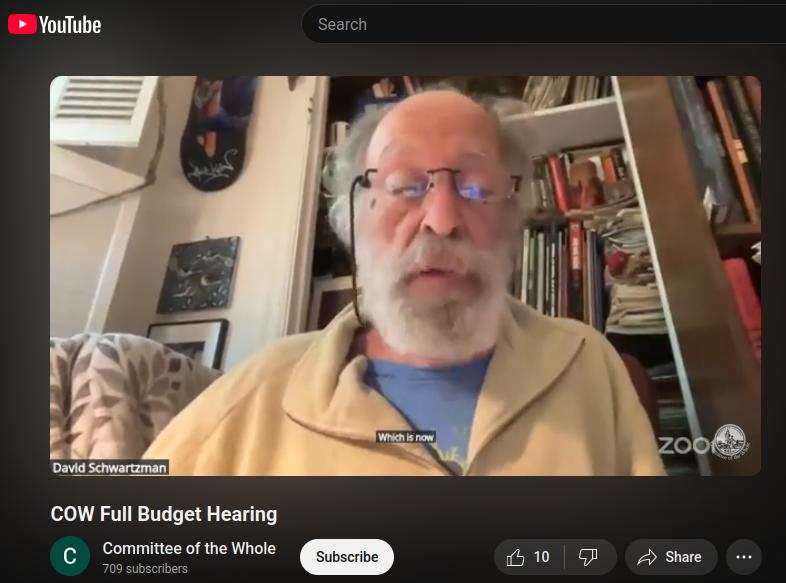
The late Professor David Schwartzman, a longtime DC advocate for social and economic justice who passed away recently, testified at the June 18 public budget hearing, warning of the Mayor’s “assault on low-income residents” testifying to the types of brutal cuts in the budget: 

Watch Professor Schwartzman’s full testimony: YouTube Video @ 4:07:04

Screenshot_2025-07-03_12-25-18.jpg
“[The] repeal of the DC child tax credit, the ending of the baby bonds program, both of which would reduce racial income and wealth gaps… [C]uts in TANF … ERAP, SNAP, … no funding for housing vouchers for individuals experiencing homelessness… ” and the list goes on, including massive curtailing of the locally funded longest running DC healthcare program, Alliance Healthcare, pushing 25,000 DC adults over the age of 26 off the program and into certain harm.

271691.png
Councilmembers Charles Allen, Zachary Parker, Brianne Nadeau, Janeese Lewis George, and Matthew Frumin — without objection from their colleagues — raised the possibility of revenue measures to save vital programs and protect vulnerable residents. 

See their discussion on “Revenue-Raising” especially at 29 minutes into the Council video: Council Session Video.

With perseverance by Councilmembers pushin back against the Chair's resistance, Mendelson agreed to receive a list of “Revenue-Raising” ideas from his colleagues for further discussion before the first Council vote on the budget, currently scheduled for July 14, 2025. Details on the upcoming vote is available here: https://lims.dccouncil.gov/Hearings/hearings/846


###

For more information, contact:

Chris Otten
DC for Reasonable Development
(202) 810 2768

DC Budget 2026: 25,000 Lower-Income DC Residents Could be Removed From DC Insurance

FOR IMMEDIATE RELEASE

DC Budget 2026: Council May Approve Bowser's Elimination of Healthcare for 25,000 Low-Income Adults While Protecting Nearly a Billion in Stadium Funding — Advocates Demand Council Reverse Plan to Kill 25-Year-Old Healthcare Alliance Program

COUNCIL BUDGET SESSION WATCH PARTY ANNOUNCED

Washington, D.C. — A new legal analysis authored in part by former DC Councilmember David Grosso confirms that the DC Council Committee on Health has so far chosen not to reverse Mayor Muriel Bowser’s plan to effectively end the DC Healthcare Alliance program for adults over 21. According to the report:

On October 1, 2027, coverage for all Alliance participants aged 21 and older will end, leaving the program available only to children and young adults under 21.” (Full report: Arent Fox Schiff on DC Healthcare Alliance)

The proposed cuts may save around $100 million annually for the District but would leave 25,000 low-income DC residents un- or under-insured, pushing them into precarious health outcomes and greater reliance on even more expensive emergency services.

The Keep DC Healthy Coalition has informed Councilmembers that fully funding the Alliance program would provide critical cost savings and better health outcomes for DC: As insured residents receive regular primary care and experience 40% fewer emergency visits and 53% fewer hospitalizations, saving an estimated $3,400 per person compared to the costs of irregular, emergency-driven care.

Advocates emphasize the disproportionate impact these cuts will have on East of the River Wards 7 and 8, which have the highest Alliance enrollment and where life expectancy is already on average 15-years shorter than in wealthier areas of the city.

Keep DC Healthy Coalition also highlighted the broader economic and public health consequences:

“A failed primary care system will result in a sicker workforce and a health system even more overburdened and spiraling from lack of compensation for care than it is now. These impacts will affect everyone who relies on the safety net, or on hospitals that see a lot of uncompensated care, not ‘just’ Alliance beneficiaries.”

The DC City Council is scheduled to hold a budget work session on Wednesday, July 2, and the Fair Budget Coalition has organized a virtual watch party for concerned residents to follow developments and show support for preserving vital healthcare services.

Join the Budget Work Session Watch Party:

  • Date: Wednesday, July 2, 2025

  • Time: 10:30 AM ET

  • Zoom Link: Join Meeting

  • Meeting ID: 890 4090 6207

  • Passcode: 060912


For more information, contact:

Chris Otten
DC for Reasonable Development
(202) 810 2768

CM White Threatens DC Residents’ Housing Futures with OAH Treatment

Press Alert, DC for Reasonable Development
dc4reality@gmail.com,  202-810-2768

Robert White Considering a Slew of Bowser Proposals to Hasten Evictions of DC Residents; One Change: Having the OAH Arbitrate Housing Issues, An Agency Without Any Online Pleadings Docket

Washington, DC — Including the attacks on  TOPA, ERAP, SNAP, and TANF.
Robert White, City Councilmember At-Large, is considering carrying more water for Mayor Bowser by shifting housing conditions and eviction cases to the DC Office of Administrative Hearings (OAH) from the DC Landlord Tenant Court.

Unlike the DC Landlord Tenant Court, the OAH does not have any public online dockets, keeping the misery of the current DC evictions parade quite discrete and out of the public eye. 

“It's a serious joke that Mr. White would be putting the imminent threat of homelessness and the future of DC families in the hands of an agency, the OAH, that doesn't even account for filings and pleadings with an online docket,” stated Chris Otten, co-convenor of DC for Reasonable Development.

This morning,. members of the Green New Deal Coalition and Fair Budget Coalition among others had a sleep-in at CM Whites' office protesting Mayor Bowser's cuts to fundamental housing programs in this year's budget. During the action, it was reported by Council staff  that Mr. White was down at the DC Landlord Tenant Court.

###

——— Forwarded message ———
From: East Peterson-Trujillo <east@gndfordc.org>
Date: Mon, Jun 23, 2025 at 12:46 PM
Subject: RELEASE: Activists “Sleep In” in Council Member White's office to demand housing
To:

PRESS RELEASE

Contact: Sophia Bos Shadi | sophia@fairbudget.org | 779-279-4251

Community Members call on Robert White to “Tax the Rich, House the District” in Sleep-In at Wilson Building

WASHINGTON, DC — Over a dozen community members joined a “sleep-in” at the John A. Wilson Building in Council Member At-Large Robert White's office on the morning of June 23rd to call on the Council Member to raise revenue to fund housing programs in this year’s budget.

“We are a group of folks directly impacted by homelessness and housing issues and their allies. We are here to demand that Robert White CHOOSE US, and commit to tax wealth to fund the housing programs we rely on to survive,” said Taniya Rogers, Community Organizer with ONE DC.

Advocates engaged in a sleep-in in solidarity with people who navigate life without a place to lay their head each night.

Bearing sleeping bags and blankets, residents laid down in the office and demanded that Council Member White tax the rich to invest in housing in the District. They chanted, “What do we want? Housing! How do we get it? Tax the Rich!”

Rogers also said, “A lot of our families who are homeless are upset, are sad, and are trying to find comfort in the city that they helped to create and build…So if this is what it is that we have to do to support them, then this is what we are going to do.”

Residents demonstrated ahead of the Housing Committee’s budget markup on June 24th.  Advocates are calling on the Council to fund Emergency Rental Assistance, affordable housing preservation in the Housing Production Trust Fund, public housing repairs, vouchers, and to protect the Tenant Opportunity to Purchase Act.

One teacher who participated in the sleep-in shared that they were taking action to advocate for their students who are homeless. 

Outside, a rally was planned to bring together diverse communities from across DC to hear from speakers directly impacted by issues of housing and homelessness, but was canceled due to this week's extreme heat, which advocates noted will impact unhoused folks first and worst.

Photos and video of the Sleep-In can be found here.

About FBC

The Fair Budget Coalition (FBC) advocates for budget and public policy initiatives that address systemic social, racial and economic inequality in the District of Columbia. We work to accomplish these goals by leveraging the collective power of our Coalition Member organizations and impacted community members, particularly those from Black and other communities of color.


East Peterson-Trujillo

they/them/theirs
Campaign Director, Green New Deal for DC
east@gndfordc.org | 925-705-5814
sign up for the GND4DC email list here